
How to Prevent Ice Dams in Northeast Ohio
Winter in Northeast Ohio can be brutal, with freezing temperatures, heavy snowfall, and strong winds coming off Lake Erie. These conditions create the perfect environment for ice dams, which can cause significant damage to your roof and home. In this guide, we’ll cover everything you need to know about preventing ice dams, including why they form, the risks they pose, and the best strategies to keep your roof safe.
Recurring ice dams can be a sign of more than just heavy snow.
Problems involving attic air leakage, insulation, ventilation, roofing, and ice-barrier protection can all contribute to winter roof problems.
S&K Construction And Remodeling LLC provides roof inspections, ice-dam evaluations, roof repairs, attic insulation services, and roof replacement throughout Northeast Ohio.
Schedule a roof inspection and estimate today.
Why Are Ice Dams So Common in Northeast Ohio?
This should be one of the strongest sections.
Northeast Ohio homes can experience:
Lake-effect snow
Repeated snowfall
Long periods below freezing
Daytime thawing followed by nighttime freezing
Temperature swings
Heavy roof snow
Older homes with attic air leakage
Older or inadequate insulation
Blocked soffit ventilation
These conditions can create repeated melt-and-refreeze cycles throughout winter.
Homes in Cleveland, Lake County, Ashtabula County, Geauga County, Trumbull County and surrounding communities can therefore experience recurring ice-dam problems.
What Actually Causes an Ice Dam?
Make this extremely clear.
Ice dams typically develop because part of the roof becomes warm enough to melt snow while the lower roof edge remains cold enough for the water to refreeze.
The heat reaching the roof can come from:
Attic air leakage
Insufficient insulation
Ductwork
Recessed lighting
Attic penetrations
Poorly sealed attic hatches
Bathroom or kitchen exhaust problems
Chimneys and flues
Other building-envelope problems
Snow and cold temperatures create the conditions, but unwanted roof heat often drives the melting.
What Is an Ice Dam?
An ice dam is a ridge or buildup of ice that forms near the colder lower edge of a snow-covered roof.
Warmth reaching the roof deck can melt snow higher on the roof.
The meltwater travels down toward the eave, where the roof surface may be colder.
The water refreezes.
As additional ice builds up, later meltwater can become trapped behind it and may move underneath shingles.
That’s when the problem can turn into a roof leak.
Understanding Ice Dams
Ice dams form when heat escapes from your attic, warming the roof and causing snow to melt. As the water runs down the roof and reaches the colder eaves, it refreezes, forming a thick ridge of ice. Over time, this ice buildup prevents proper drainage, leading to water seeping under shingles and causing leaks.
Why Are Ice Dams a Big Problem in Northeast Ohio?
Northeast Ohio experiences harsh winters due to:
- Cold Winds from Lake Erie: The lake effect snow and freezing winds make winter particularly intense, increasing the likelihood of ice dam formation.
- Fluctuating Temperatures: Temperature swings between freezing and thawing contribute to snow melting and refreezing cycles.
- Heavy Snowfall: Thick layers of snow trap heat, accelerating the melting and refreezing process.
Given these factors, homeowners in the region must take proactive steps to prevent ice dams before they cause costly roof damage.
How to Prevent Ice Dams
1. Improve Attic Insulation
One of the most effective ways to prevent ice dams is by keeping your attic cold. The goal is to minimize heat transfer from your living space into the attic, which prevents snow from melting prematurely.
- Check Your Insulation Levels: The U.S. Department of Energy recommends at least R-49 insulation in attics for cold climates.
- Seal Air Leaks: Use spray foam or caulk to seal gaps around pipes, vents, and light fixtures to prevent warm air from escaping into the attic.
- Consider Blown-In Insulation: This is an effective way to add insulation to your attic while minimizing gaps.
2. Proper Roof Ventilation
A well-ventilated attic helps maintain a consistent temperature across the roof, reducing the risk of ice dam formation.
- Soffit and Ridge Vents: These vents allow cold air to flow in through the soffits and exit through the ridge, preventing heat buildup.
- Gable Vents: In some homes, gable vents can improve airflow and balance attic temperature.
- Keep Vents Clear: Blocked vents reduce airflow, so ensure they remain free of debris and insulation.
3. Use Heated Cables
Heated roof cables can be installed along the eaves to prevent ice from forming in critical areas.
- Installation: Secure them in a zig-zag pattern along the lower edges of your roof.
- Best for High-Risk Areas: These cables are useful for homes that have chronic ice dam issues, especially in valleys and north-facing slopes.

4. Keep Gutters and Downspouts Clear
Clogged gutters and downspouts can trap melting snow, leading to ice buildup.
- Clean Gutters Before Winter: Remove leaves, twigs, and other debris before the first snowfall.
- Install Gutter Guards: These help prevent debris accumulation and improve water flow.
- Check for Ice Blockages: If gutters freeze, use warm water or a roof rake to clear minor ice buildups.
5. Remove Snow from Your Roof
Reducing the snow load on your roof helps minimize ice dam formation.
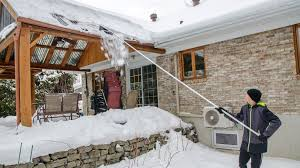
- Use a Roof Rake: A long-handled roof rake allows you to clear snow from the ground without climbing onto the roof.
- Be Careful with Ice Scrapers: Avoid damaging shingles when removing ice.
- Hire Professionals: If snow accumulation is excessive, consider hiring a roofing contractor to safely remove it.
6. Upgrade to Ice & Water Shield Underlayment
If you’re replacing your roof, consider installing an ice and water shield underlayment beneath the shingles.
- Provides an Extra Layer of Protection: This material helps prevent water from seeping into your home if ice dams do form.
- Required by Code in Many Areas: Many roofing codes in Ohio mandate the use of this underlayment along eaves and valleys.

7. Monitor Indoor Humidity Levels
High indoor humidity can contribute to attic condensation, increasing the risk of ice dams.
- Use a Hygrometer: This tool measures humidity levels in your attic.
- Improve Ventilation: Use exhaust fans in kitchens and bathrooms to reduce excess moisture.
- Consider a Dehumidifier: If attic humidity remains high, a dehumidifier can help regulate moisture levels.
1. Seal Attic Air Leaks
This should become your #1 prevention section.
Warm household air can leak into the attic through openings around:
Plumbing pipes
Wiring
Attic hatches
Dropped ceilings
Top plates
Recessed lights
Duct penetrations
Chimneys and flues
Other ceiling openings
ENERGY STAR identifies ice dams as a common symptom of attic air leakage and recommends sealing major leakage paths before adding insulation.
Air sealing needs to be performed with appropriate materials, especially around heat-producing equipment, flues, and chimneys.
2. Improve Attic Insulation
Insulation helps reduce heat transfer between the conditioned home and attic.
The correct amount depends on:
Existing insulation
Insulation type
Attic construction
Climate zone
Local requirements
Home condition
ENERGY STAR’s current retrofit recommendations for climate zones 5 and 6 generally call for higher levels than the blanket R-49 statement currently on the page; recommendations vary based on how much insulation is already present.
The goal isn’t simply to pile insulation into the attic.
Air sealing should be addressed, soffit airflow should remain open, and insulation should be installed correctly.
3. Maintain Proper Attic Ventilation
Ventilation can help keep a vented attic closer to outdoor temperature and remove moisture.
A common balanced system uses:
Soffit ventilation for intake
Ridge ventilation for exhaust
Properly installed attic baffles
Open airflow pathways
ENERGY STAR specifically warns homeowners not to cover soffit vents with insulation because doing so blocks the intended airflow.
Don’t tell homeowners to simply add more vents without evaluating the complete system.
Internally link this to:
Roof Ventilation Calculator
4. Keep Soffit Vents From Being Blocked
This deserves its own section because it connects to your soffit/fascia content.
Insulation can sometimes be pushed against the roof edge and block soffit intake ventilation.
Roofing baffles or rafter vents can maintain an airflow channel from the soffit into the attic.
Signs of blocked intake can include:
Poor attic airflow
Frost in the attic
Condensation
Uneven roof snow melt
Recurring winter moisture problems
ENERGY STAR specifically recommends preserving this airflow path.
Internally link this to your soffit/fascia page.
5. Make Sure Bathroom and Kitchen Exhaust Goes Outside
Bathroom, kitchen, and dryer exhaust should not simply dump warm humid air into an attic.
That moisture and heat can contribute to attic problems.
ENERGY STAR specifically identifies bathroom, kitchen, and clothes-dryer exhaust entering an attic as a condition that should be professionally corrected.
This is especially important in winter when warm moist air entering a cold attic can condense or freeze.
6. Use Proper Ice-and-Water Protection
Ice-and-water membrane does not prevent the ice dam itself.
It provides additional protection against water backing underneath shingles.
Ohio’s residential roofing provisions require ice barriers in designated areas with a history of ice forming along the eaves and causing water backup. Under the cited provision, the barrier generally extends to at least 24 inches inside the exterior wall line, with additional requirements on certain steeper roofs.
During a Northeast Ohio roof replacement, correct ice-barrier installation is an important part of the complete roofing system.
Internally link to:
Ice and Water Shield vs Felt
7. Remove Excessive Snow Safely
Removing some snow near the lower portion of a roof can reduce the amount of snow available to melt and refreeze.
A long-handled roof rake may allow snow to be removed while remaining on the ground.
Homeowners should:
Avoid climbing onto snowy roofs
Avoid striking shingles with metal tools
Avoid aggressively chipping ice
Avoid pulling snow directly onto themselves
Use professional help for dangerous or excessive accumulation
This should be positioned as winter management rather than the permanent cure.
8. Keep Gutters and Downspouts Clear
Clean gutters are useful, but make the explanation accurate.
Leaves and debris can interfere with normal drainage and frozen gutters can be damaged during winter.
However, gutter cleaning does not correct the primary heat-loss mechanism that creates many roof ice dams.
A house can develop ice dams even without gutters.
Keep gutters clean as part of overall winter roof maintenance, not as the main prevention method.
9. Are Roof Heat Cables a Good Solution?
Roof heat cables can sometimes help create drainage paths along vulnerable eaves, valleys, or gutter areas.
However, they should usually be considered a management tool, not a substitute for correcting:
Air leakage
Insulation problems
Poor attic ventilation
Roof-design problems
Persistent heat loss
If a house requires heat cables every winter, it may be worth investigating why ice dams repeatedly form.
Do Gutters Cause Ice Dams?
No.
This would be an excellent FAQ because people misunderstand it.
Gutters may fill with ice during an ice-dam event, but the ice dam generally begins because meltwater refreezes at a colder portion of the roof.
Gutters can worsen the visible ice buildup or suffer damage, but replacing gutters alone will not correct attic heat loss.
Does More Attic Insulation Always Fix Ice Dams?
No.
Insulation is important, but it may not correct major air leakage.
Warm air can move through small openings around:
Attic hatches
Plumbing penetrations
Electrical penetrations
Dropped soffits
Lights
Wall openings
Chimneys
That’s why ENERGY STAR recommends air sealing before or in conjunction with adding insulation.
Does Roof Ventilation Prevent Ice Dams?
Proper ventilation can help reduce the risk, but ventilation alone is not a guarantee.
The roof system must be evaluated together with:
Air sealing
Insulation
Indoor moisture
Exhaust fans
Attic design
Soffit intake
Roof exhaust
Some homes also use unvented roof assemblies that are designed differently.
Don’t present “add more vents” as a universal solution.
Does Ice-and-Water Shield Prevent Ice Dams?
No.
This is an important distinction.
Ice-and-water shield helps protect vulnerable roof-deck areas if water backs up beneath roofing.
It does not prevent snow from melting or water from refreezing at the eave.
Think:
Air sealing + insulation + proper ventilation = address formation risk.
Ice-and-water shield = additional protection if backup occurs.
Why Does Only One Side of My Roof Get Ice Dams?
Great search section.
One roof slope may develop more ice because of:
Sun exposure
Roof orientation
Snow drifting
Attic heat leakage
Bathroom exhaust
Chimneys
Different insulation levels
Roof geometry
Dormers
Valleys
Additions
Blocked ventilation
Uneven snowmelt can provide clues about where attic or roof conditions differ.
Why Are Ice Dams Worse on Older Northeast Ohio Homes?
Older homes may have:
Less attic insulation
More air leakage
Older recessed lighting
Unsealed wall cavities
Complex rooflines
Blocked soffits
Older ventilation systems
Multiple additions
Chimneys
Finished attic spaces
That does not mean every old house develops ice dams, but older construction can make attic heat-loss problems more common or harder to diagnose.
This is a strong Northeast Ohio section because of the large number of older homes throughout Cleveland and surrounding communities.
Can Ice Dams Cause Roof Leaks?
Yes.
Water trapped behind an ice dam may move underneath roofing materials and reach:
Underlayment
Roof decking
Attic insulation
Exterior walls
Soffits
Fascia
Interior ceilings
The interior leak may appear several feet away from the visible ice because water can travel along the roof deck or framing.
Can Ice Dams Damage Soffit and Fascia?
Yes.
Ice and trapped meltwater can affect:
Gutters
Fascia
Soffits
Roof decking
Roof edges
Repeated winter moisture can contribute to deterioration of wood components.
Internally link this to:
Labor Cost to Install Soffit and Fascia
That’s a strong topic connection.
Can Ice Dams Damage Gutters?
Yes.
Heavy ice can place additional weight on gutters and fasteners.
Potential problems include:
Loose gutters
Sagging
Separated joints
Bent hangers
Damaged fascia
Downspout blockages
But again, replacing the gutter does not necessarily correct why the ice dam formed.
Signs You May Have an Ice Dam Problem
Look for:
Large ice buildup at roof edges
Icicles accompanied by thick roof-edge ice
Interior ceiling stains
Water near exterior walls
Wet attic insulation
Frost inside the attic
Damaged soffit
Sagging gutters
Repeated leaks during snowmelt
Uneven snow melt on the roof
Recurring ice every winter
What Should You Do if an Ice Dam Is Already Leaking?
If water is already entering the home:
Protect belongings below the leak
Contain interior water when safe
Avoid climbing onto the roof
Do not aggressively chip the ice
Document visible damage
Contact a roofing professional
Check the attic if it can be accessed safely
After the immediate leak is controlled, identify why the ice dam formed so the problem doesn’t simply return during the next snowfall.
When Should a Roof Be Replaced Because of Ice-Dam Damage?
One ice dam does not automatically mean you need a new roof.
Localized damage may be repairable.
Replacement becomes more reasonable when there is:
Widespread shingle deterioration
Multiple recurring leaks
Extensive decking damage
Aging shingles
Repeated repairs
Major roof-edge damage
Poor previous installation
Large areas needing correction
The decision should be based on the overall condition of the roof.
Preventing Ice Dams During a Northeast Ohio Roof Replacement
This should be a major money section.
A roof replacement is an opportunity to evaluate more than just shingles.
S&K Construction And Remodeling LLC can inspect:
Roof decking
Eaves
Ice-and-water protection
Underlayment
Drip edge
Soffit ventilation
Ridge ventilation
Roof penetrations
Flashing
Existing attic conditions visible during the project
A complete roofing system should be designed to handle Northeast Ohio snow, rain, ice, wind, and repeated freeze-thaw conditions.
Ice Dam Inspections in Northeast Ohio
S&K Construction And Remodeling LLC provides roof inspections, winter roof evaluations, roof repairs, insulation services, and complete roof replacement throughout Northeast Ohio.
If your home develops ice dams every winter, the goal should not simply be removing the visible ice.
The roof and attic should be evaluated for contributing conditions such as:
Air leakage
Insulation
Ventilation
Roof geometry
Ice-barrier protection
Roof damage
Soffit intake
Roof penetrations
We provide roofing services throughout Cleveland, Lake County, Ashtabula County, Geauga County, Trumbull County, Summit County, and surrounding Northeast Ohio communities.
What to Do If Ice Dams Form
Despite taking precautions, ice dams may still develop. If you notice ice buildup along your roof edges, take these steps:
- Use Calcium Chloride Ice Melt: Sprinkle calcium chloride (not rock salt) over the ice dam to speed up melting.
- Create Drainage Channels: Fill a nylon stocking with ice melt and place it perpendicular to the dam to create drainage paths.
- Avoid Chipping the Ice: Manually chipping away at ice dams can damage shingles and cause leaks.
- Hire a Professional: If ice dams persist, consult a roofing professional to safely remove them and assess ventilation issues.
Final Thoughts
Ice dams are a major concern for homeowners in Northeast Ohio, especially with the tough winter weather coming off Lake Erie. By improving attic insulation, ensuring proper ventilation, and keeping gutters clear, you can significantly reduce the risk of ice dams forming. Proactive maintenance and preparation before winter sets in will help protect your home from costly water damage and roof repairs. If you need assistance, consult a professional roofing contractor to ensure your home is ready for the harsh Northeast Ohio winters.
https://www.youtube.com/watch?v=5AGU5wDO0cw