(440) 307-2060
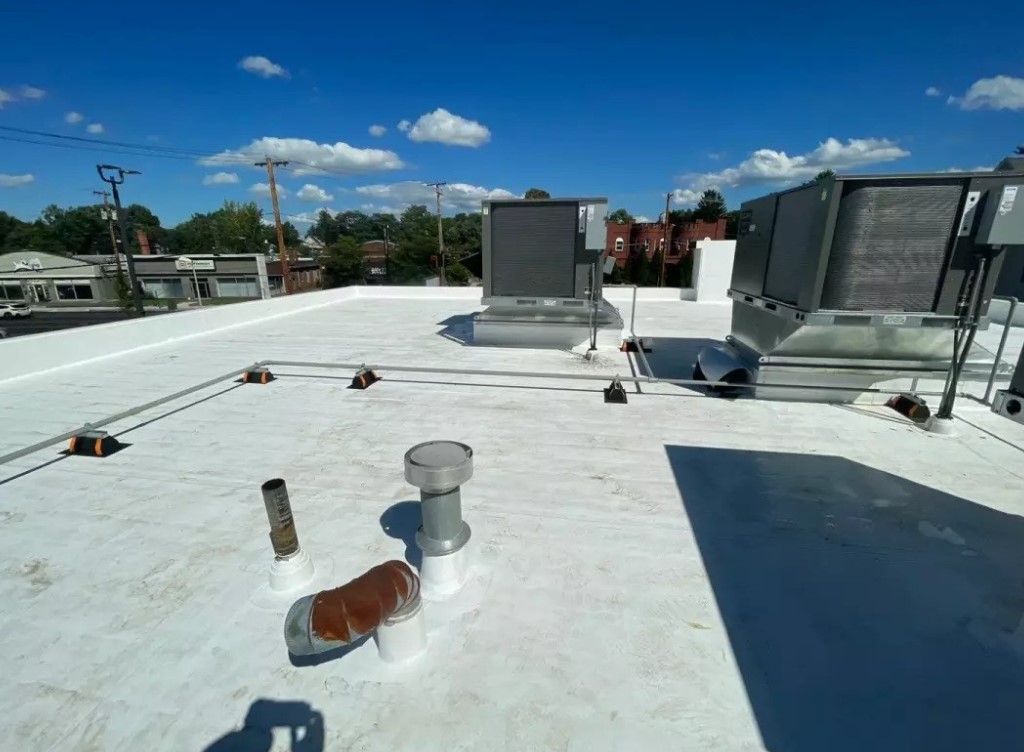
When a commercial roof begins to pond water after a heavy Cleveland snowfall, material choice quickly becomes more than a technical detail. Performance becomes visible. Seams are tested. Drainage patterns matter.
That is when property owners often start with a straightforward question: what is PVC roofing, and how does it compare to other flat roof materials?
PVC roofing is a single-ply vinyl roofing membrane used on flat and low-slope commercial roofs. Those researching PVC roof pros and cons are typically weighing it against EPDM or TPO, trying to determine which system offers the best balance of durability, seam strength, chemical resistance, and long-term cost control.
In Northeast Ohio, climate exposure plays a meaningful role in how these materials perform. Freeze-thaw cycles, ponding water, rooftop equipment, and snow load all influence whether PVC is the right choice.
To evaluate PVC roofing properly, you need to know:
- What PVC roofing is and how it functions
- How a vinyl roofing membrane is installed
- The realistic PVC roof pros and cons in this region
- When PVC makes sense and when another membrane may be more practical
If you are evaluating options for a flat or low-slope roof, a clear understanding of PVC roofing provides a strong starting point.
What Is PVC Roofing and Why It Matters in Cleveland, OH
To answer what PVC roofing is, we begin with the material itself.
PVC stands for polyvinyl chloride. In roofing applications, it refers to a flexible thermoplastic membrane designed specifically for flat and low-slope systems. The membrane is reinforced with polyester or fiberglass and installed in large sheets. Seams are heat-welded together to create a watertight barrier.
That seam construction is not a minor detail. In Cleveland, OH, it is central to long-term performance.
Flat roofs in Northeast Ohio regularly face:
- Snow accumulation
- Ice buildup
- Wind uplift
- Ponding water
- Freeze and thaw movement
A vinyl roofing membrane must accommodate expansion and contraction while maintaining seam integrity. That is why PVC roofing is often considered for commercial buildings with significant rooftop exposure.
At the same time, it is important to remember that the membrane is only one component of the roofing system. Proper slope, insulation, attachment method, and drainage design all influence durability. Material selection alone does not determine success.
For a broader overview of commercial flat roof categories, read “Understanding the Different Types of Commercial Roofing.” That resource provides additional context for how PVC fits within the wider range of low-slope systems.
With that foundation in place, the next step is evaluating whether PVC roofing aligns with your building’s practical needs.
Before Choosing PVC Roofing: Practical Considerations
Understanding what PVC roofing is provides technical clarity. Deciding whether it is appropriate for your building requires stepping back and reviewing key factors.
Budget and Lifecycle Planning
PVC membranes typically cost more upfront than EPDM or TPO. However, they offer strong chemical resistance and durable heat-welded seams. When evaluating PVC roof pros and cons, it is important to look beyond installation price and consider total lifecycle value.
For some buildings, the higher upfront investment may be justified. For others, a lower-cost membrane may perform adequately.
Building Use and Roof Exposure
PVC roofing is often selected for:
- Restaurants with grease exhaust
- Manufacturing facilities
- Buildings exposed to chemicals
- High-traffic rooftop areas
Exposure conditions matter. If your roof has minimal contamination risk or rooftop traffic, another membrane may provide similar performance at lower cost.
Existing Roof Condition
In some cases, a PVC membrane can be installed over an existing roofing system if the structure allows. In other situations, a full tear-off is necessary to ensure proper performance.
Once these practical factors are clarified, it becomes easier to understand how PVC roofing is installed and how it performs over time.
PVC Roofing Explained: Structure, Installation, and Performance
Now that we have defined what PVC roofing is and when it may be appropriate, let’s examine how a vinyl roofing membrane is installed and why that installation method matters.
How a Vinyl Roofing Membrane Is Installed
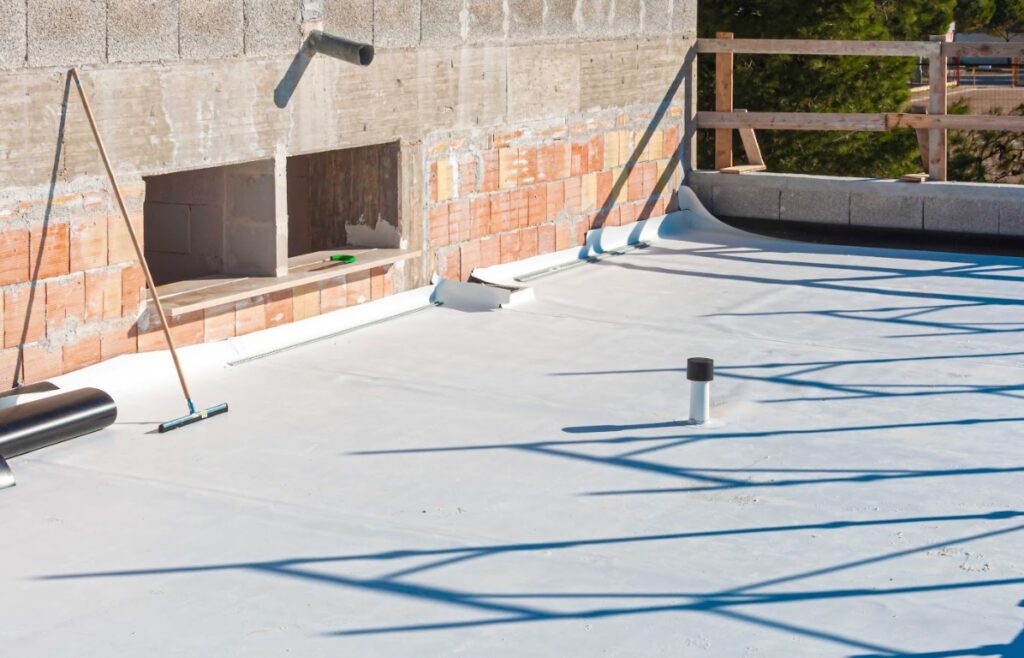
PVC roofing is installed in large rolls. Sheets are mechanically attached or fully adhered to the roof deck or insulation layer. Seams are fused together using hot air welding, forming a continuous waterproof surface.
Heat-welded seams are one of the strongest advantages in the PVC roof pros and cons discussion. Unlike adhesive seams, welded joints create a bonded connection that resists separation under ponding water and wind uplift.
That said, this advantage depends entirely on proper workmanship. Seam quality and detailing precision directly influence long-term performance.
Understanding the installation method naturally leads into a closer look at PVC roof pros and cons.
PVC Roof Pros
When evaluating PVC roofing, the benefits often center on seam performance and resistance characteristics.
Here are the primary advantages when reviewing PVC roof pros and cons:
Strong Seam Integrity
Heat-welded seams reduce leak risk and perform well under ponding water conditions.
Chemical and Grease Resistance
PVC performs better than many flat roof materials when exposed to oils or industrial contaminants.
Reflective Surface
Most PVC membranes are white and reflect sunlight, which can reduce rooftop heat absorption in summer.
Durability
Properly installed PVC systems often last 20 to 30 years with routine maintenance.
These strengths make PVC roofing especially appealing in specific commercial environments.
However, evaluating PVC roof pros and cons requires an honest look at limitations as well.
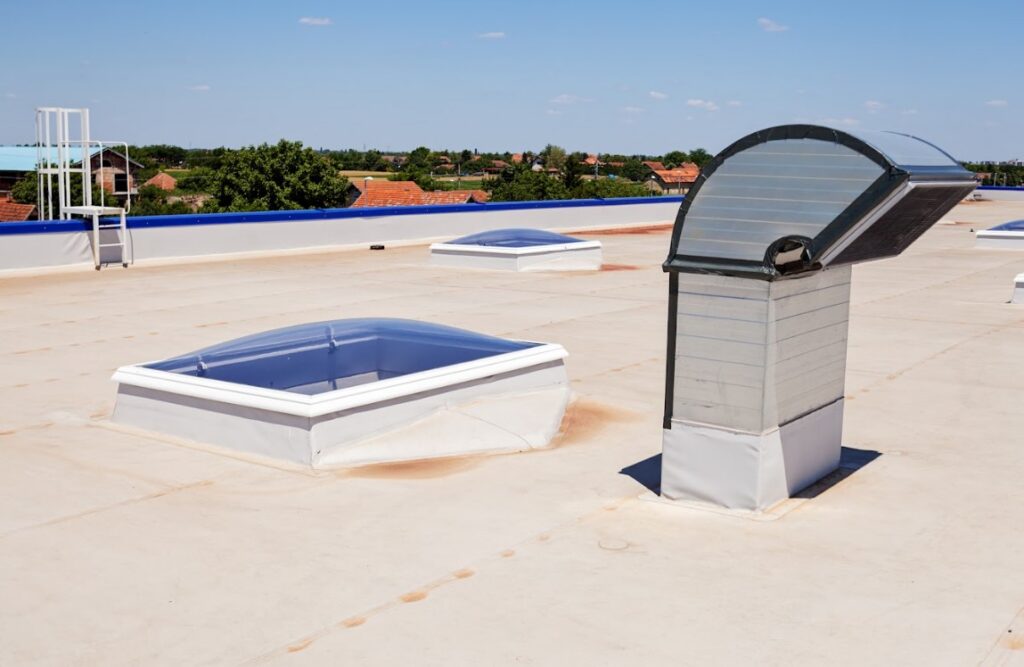
PVC Roof Cons
No roofing system is without tradeoffs. Understanding PVC roof pros and cons in Cleveland means acknowledging the practical considerations.
Higher Upfront Cost
PVC generally costs more than EPDM and often slightly more than TPO.
Cold Weather Flexibility
While durable, PVC can be more rigid than EPDM in extreme cold conditions.
Installation Sensitivity
Weld quality and proper detailing are critical. Poor workmanship can shorten lifespan regardless of membrane type.
These factors should be weighed alongside the benefits, especially when comparing PVC to other flat roof materials.
PVC vs Other Flat Roof Materials
After understanding what PVC roofing is and reviewing its pros and cons, the next logical step is comparison.
PVC vs EPDM
EPDM is a synthetic rubber membrane known for flexibility and reliable performance in cold climates. It handles freeze-and-thaw cycles very well and typically carries a lower upfront cost.
PVC offers stronger chemical resistance and heat-welded seams, which can provide added durability in environments exposed to grease or industrial contaminants.
In Cleveland’s climate, EPDM remains a strong option for many properties, while PVC may be preferable for buildings with higher exposure risks.
PVC vs TPO
TPO is another thermoplastic membrane that also uses heat-welded seams.
Both PVC and TPO offer reflective surfaces that reduce rooftop heat absorption. However, PVC generally provides stronger chemical resistance, while TPO is often slightly more budget-friendly.
The appropriate choice depends on building use, exposure conditions, and long-term performance priorities.
For a broader comparison, our guide on Flat Roof Membranes: 5 Types of Low-Slope Roofing Materials provides additional context across all major systems.
Warranties, Energy Performance, and Risk Factors
Understanding what PVC roofing is also requires looking beyond material characteristics to system performance.
Warranty Structure
PVC warranties vary depending on:
- Membrane thickness
- Installation method
- Insulation configuration
- Installer qualifications
Manufacturer warranties may range from 15 to 30 years. However, warranty strength is closely tied to installation quality.
Energy Considerations in Northeast Ohio
Reflective membranes can reduce summer heat absorption. In colder climates like Cleveland, heating costs often exceed cooling costs. Energy savings may be modest unless the building has substantial cooling demand.
Regional Risk Factors
Flat roofs in Northeast Ohio face:
- Ponding water after snowmelt
- Ice expansion at seams
- Wind uplift during storms
A vinyl roofing membrane must be installed with proper drainage design and insulation planning. Membrane selection alone does not prevent leaks.
At S&K Construction And Remodeling, we evaluate insulation, slope, attachment method, and drainage before recommending a membrane. The goal is not simply to install PVC roofing, but to install the most appropriate system for long-term performance.
PVC Roofing FAQs for Cleveland, OH Commercial Property Owners
Property owners researching what is PVC roofing and evaluating PVC roof pros and cons often have focused questions about durability and comparisons.
What is PVC roofing used for?
PVC roofing is primarily used for flat and low-slope commercial roofs. It is common on restaurants, warehouses, and facilities exposed to grease or chemicals because of its chemical resistance and heat-welded seams.
How long does a PVC roof last?
A PVC roof typically lasts between 20 and 30 years when properly installed and maintained. Lifespan depends on membrane thickness, attachment method, and exposure conditions.
Is PVC roofing better than EPDM?
PVC roofing is not automatically better than EPDM. PVC offers chemical resistance and welded seams, while EPDM provides excellent cold-weather flexibility and often comes at a lower upfront cost.
What are the main PVC roof pros and cons?
The main PVC roof pros include seam strength, chemical resistance, and reflectivity. The primary cons include higher initial cost and the need for precise installation.
Is a vinyl roofing membrane good for Cleveland winters?
A vinyl roofing membrane can perform well in Cleveland winters when properly installed with appropriate drainage and insulation. System design plays a major role in cold-weather durability.
Do you install PVC roofing systems?
Yes, we install PVC roofing systems for commercial and low-slope properties. We also evaluate whether PVC, EPDM, or another membrane is the most appropriate fit based on building use and long-term goals.
Making an Informed Decision About PVC Roofing
When asking what PVC roofing is, the more important question is whether it fits your building’s demands.
PVC offers strong seam performance, chemical resistance, and durability. It also requires a higher upfront investment and careful installation. Comparing PVC roof pros and cons within the context of Cleveland’s climate allows property owners to make practical, financially responsible decisions.
At S&K Construction And Remodeling, we approach flat roofing projects with clear documentation, detailed estimates, and on-site supervision. Whether the right solution is PVC, EPDM, or another membrane, our focus remains long-term performance and transparent communication.
If you are evaluating a vinyl roofing membrane for your property in Cleveland, OH, arrange a no-obligation roof evaluation today.