The Ultimate Guide to Removing or Replacing an Asbestos Roof
Asbestos was once a widely used material in roofing due to its durability, fire resistance, and insulation properties. However, its health risks have led to strict regulations and the need for careful removal or replacement. If your property has an asbestos roof, understanding the removal and replacement process is crucial for safety and compliance. Before planning removal, a professional assessment can help determine the condition of the roof and whether replacement is necessary. This ultimate guide covers everything you need to know about asbestos roof removal and replacement from a professional roof replacement services
Think Your Roof May Contain Asbestos?
Older roofing materials may contain asbestos, especially on homes, garages, barns, commercial buildings, or additions built before modern material standards. If you suspect your roof may contain asbestos, do not cut, tear off, break, drill, sand, or disturb the material until it has been properly evaluated.
S&K Construction And Remodeling LLC can inspect the visible condition of your roofing system and help you understand your roof replacement options. If asbestos is suspected, proper testing and licensed asbestos abatement may be required before a new roof system can be installed.
Important: S&K does not make asbestos laboratory determinations from appearance alone. Suspected asbestos-containing materials should be tested and handled according to applicable safety and regulatory requirements.
Schedule a free roof inspection and estimate in Northeast Ohio.
What is Asbestos Roofing?
Asbestos is a naturally occurring mineral that was commonly used in building materials, including roofing, from the early 1900s until the late 20th century. It was primarily used in cement-based corrugated roofing sheets, shingles, and tiles. While asbestos roofs were durable, they pose serious health hazards when disturbed, releasing microscopic fibers that can cause respiratory diseases, including asbestosis, lung cancer, and mesothelioma.
How to Identify an Asbestos Roof
If your home or building was constructed before the 1980s, your roof might contain asbestos. Here are some common signs:
- Corrugated cement sheets that appear brittle and aged
- Flat asbestos sheets or tiles
- Roofing materials labeled with asbestos-related terms like AC (asbestos cement)
- Laboratory testing is the only way to confirm asbestos presence definitively
Why You Should Remove or Replace an Asbestos Roof
- Health Hazards – When asbestos fibers become airborne due to wear, damage, or improper handling, they pose significant health risks.
- Legal and Safety Regulations – Many states and countries have strict regulations regarding asbestos removal and disposal.
- Property Value – Homes with asbestos roofs may be harder to sell due to associated risks.
- Durability Concerns – Older asbestos roofs deteriorate over time, leading to leaks and structural weakness. In some cases, damaged roofing systems may require complete roof replacement instead of temporary repairs..
Signs an Older Asbestos Roof May Need Professional Attention
An older roof that may contain asbestos should be handled carefully, especially if the material is damaged, brittle, leaking, or deteriorating.
You may need a professional inspection if you notice:
- Roof leaks
- Cracked or broken roofing panels
- Loose or missing roofing pieces
- Water stains inside the building
- Soft decking or structural concerns
- Moss, algae, or surface deterioration
- Storm or wind damage
- Repeated repairs in the same area
- Plans to sell, remodel, or replace the roof
Do not try to remove suspected asbestos roofing yourself. Disturbing the material can create safety and compliance problems.
Why Testing Matters Before Roof Replacement
You cannot confirm asbestos by appearance alone. Some older roofing materials may look like asbestos cement, fiber cement, slate, shingles, or corrugated panels, but laboratory testing is the only reliable way to know whether asbestos is present.
Before planning a roof tear-off or replacement, the material should be properly evaluated. This helps protect homeowners, workers, neighbors, and the property from accidental fiber release.
EPA guidance says asbestos-containing material that is more than slightly damaged, or material that will be disturbed during home changes, should be repaired or removed by a trained and accredited asbestos professional.
Important Safety and Compliance Note for Ohio Property Owners
Asbestos rules can vary depending on the property type, amount of material, condition of the material, and whether the work is a renovation, demolition, repair, or abatement project. Ohio rules include inspection, notification, licensed-contractor, and disposal requirements for certain asbestos-related work.
Before disturbing suspected asbestos roofing, property owners should confirm requirements with the appropriate agency or a licensed asbestos professional.
S&K can help homeowners and property owners understand the roofing replacement side of the project, including replacement materials, roof design, estimate options, and scheduling after the asbestos issue is properly addressed.
The Asbestos Roof Removal Process
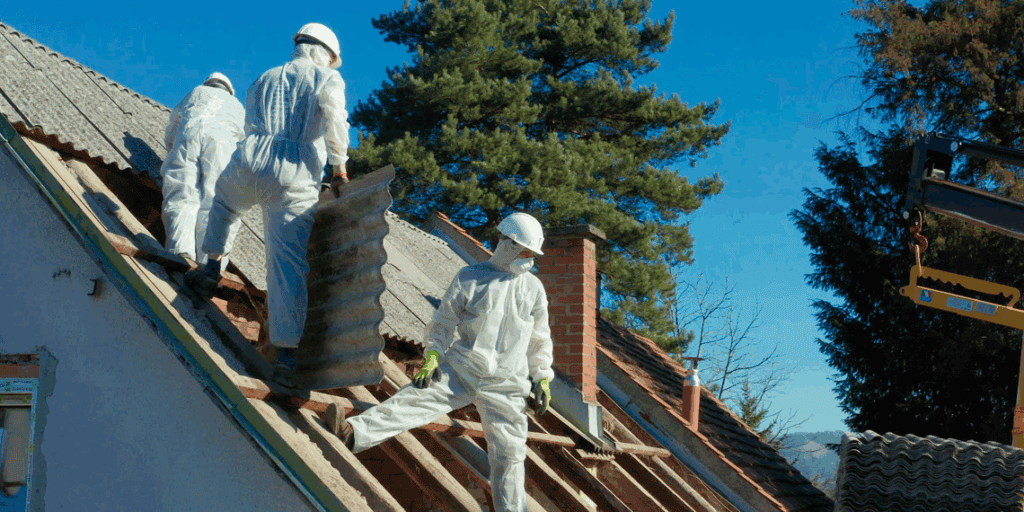
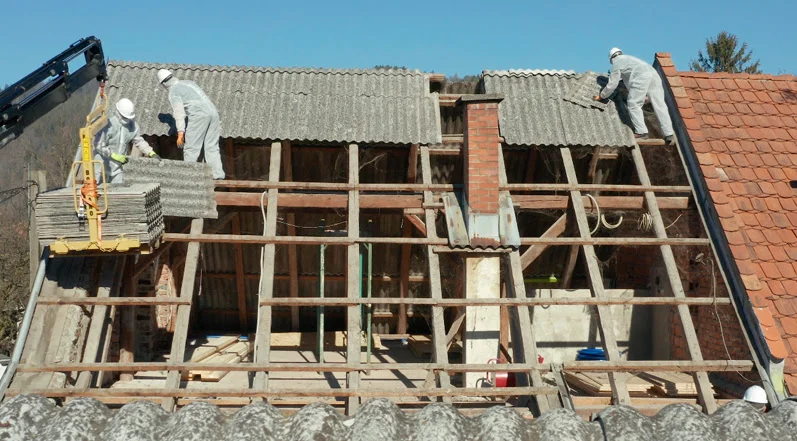
Since asbestos is highly hazardous, removing an asbestos roof should always be done by licensed professionals following strict safety guidelines. Here’s what the process typically involves:
1. Inspection and Assessment
A certified asbestos removal contractor will inspect the roof and take samples for testing to confirm asbestos content. After confirming the roof condition, homeowners can evaluate whether repair, reroofing, or full replacement is the best solution.
2. Obtaining Permits and Compliance Checks
Depending on your location, you may need permits for asbestos removal. Professionals ensure all work complies with environmental and safety regulations.
3. Preparation for Removal
- Setting up containment areas
- Wearing protective suits and respiratory masks
- Sealing off nearby areas to prevent fiber contamination
4. Careful Removal of Asbestos Roofing
- Roofing sheets are carefully removed without breaking them to minimize airborne fibers.
- Materials are sealed in special hazardous waste bags for disposal.
5. Safe Disposal
Asbestos waste is transported to designated disposal sites that comply with hazardous waste regulations.
6. Decontamination and Cleanup
After removal, the worksite is thoroughly cleaned, and air quality testing is performed to ensure no residual asbestos fibers remain.
Asbestos Roof Replacement Options
Once the asbestos roof is removed, it’s time to install a safer and more durable roofing material. Here are the top alternatives:
1. Metal Roofing
- Lightweight and long-lasting
- Fire and weather-resistant
- Energy-efficient
2. Asphalt Shingles
- Affordable and widely available
- Aesthetic appeal with various colors and styles
3. Concrete or Clay Tiles
- Extremely durable and fire-resistant
- Ideal for warmer climates
4. TPO or PVC Roofing (For Flat Roofs)
- Excellent waterproofing properties
- Energy-efficient and UV-resistant
Cost of Asbestos Roof Removal and Replacement
The total cost depends on factors like roof size, accessibility, local disposal fees, and new roofing material selection. On average:
- Asbestos removal costs: $5 – $15 per square foot
- New roof installation: $4 – $20 per square foot
- Total estimated cost: $8,000 – $30,000 for a standard-sized home
In many asbestos roof replacement projects, removing the existing roofing system is the first step before installing new materials. Understanding the roof tear-off process helps homeowners prepare for what to expect.
Best Replacement Roofing Options After Asbestos Removal
Once asbestos-containing roofing materials are properly removed or abated, the next step is choosing a safe, durable roofing system for the home or building.
Common replacement options include:
- Asphalt shingle roofing
- Standing seam metal roofing
- EPDM rubber roofing
- TPO roofing
- PVC roofing
- Modified bitumen
- Commercial flat roofing systems
The best option depends on the roof pitch, building type, drainage, ventilation, insulation, budget, and whether the property is residential or commercial.
S&K Construction And Remodeling LLC can inspect your roof and provide a written replacement estimate for the new roofing system.
Conclusion
Removing or replacing an asbestos roof is a crucial step in ensuring safety, legal compliance, and improved property value. Since asbestos handling is hazardous, always hire certified professionals for the job. If you’re considering asbestos roof removal and replacement, contact S&K Construction and Remodeling LLC for a professional roof inspection, safe removal guidance, and complete roof replacement solutions.
https://www.youtube.com/watch?v=660rIFo01GY