TPO Meaning: Everything You Need to Know About TPO Roofing in Northeast Ohio
When homeowners and commercial property owners start researching roofing options, TPO roofing often comes up as a top choice. But many people immediately wonder: What does TPO mean? And beyond the name, is it the right material for your property in Ohio’s unpredictable weather?
Need a TPO Roof Inspection for Your Commercial Building?
TPO roofing is one of the most common options for commercial flat and low-slope roofs, but the system must be installed correctly to prevent leaks, seam failures, ponding water, insulation damage, and premature roof failure.
S&K Construction And Remodeling LLC provides commercial roof inspections, TPO roof repair, flat roof replacement, EPDM roofing, PVC roofing, and low-slope roofing services throughout Northeast Ohio.
If your commercial building has roof leaks, rising energy bills, damaged membrane, soft spots, or repeated flat roof repairs, our team can inspect the roof and explain whether you need a repair, restoration, or full roof replacement.
Schedule a free commercial roof inspection and estimate today.
If you’re in Youngstown, Cleveland, Lakewood, Medina, Willoughby, Chardon, Beachwood, Mayfield Heights, or anywhere in Northeast Ohio, this guide will explain TPO meaning, its benefits, how it compares to other roofing types, and why partnering with S&K Construction and Remodeling LLC ensures your TPO roof is installed the right way.
We’ll cover:
- The full form and meaning of TPO
- The history and composition of TPO roofing material
- Key benefits for Ohio homes and businesses
- The TPO roofing installation process
- TPO vs. other single-ply membranes (EPDM, PVC)
- Maintenance tips for a long-lasting TPO roof
- Why S&K Construction and Remodeling LLC is the trusted choice in Northeast Ohio
- Financing options to make your project affordable
1. TPO Meaning: What Does It Stand For?
TPO stands for Thermoplastic Polyolefin — a single-ply roofing membrane made from a blend of polypropylene and ethylene-propylene rubber. It’s designed to be flexible, durable, and energy-efficient.
Although “thermoplastic” might sound like it’s related to hard plastic, in roofing terms it means the material can be heat-welded at the seams, creating a watertight bond. This makes TPO an excellent choice for both flat and low-slope roofs.
Quick Facts About TPO:
- Introduced in the roofing market in the early 1990s
- Primarily used in commercial roofing but now increasingly popular for residential applications
- Typically available in white, gray, or tan for energy efficiency and aesthetic flexibility
- Known for reflecting sunlight and reducing cooling costs
s TPO Roofing Right for Your Commercial Building?
TPO can be a strong option for many commercial buildings because it is lightweight, reflective, heat-welded at the seams, and commonly used on flat and low-slope roofs. It is often installed on offices, retail buildings, warehouses, churches, restaurants, apartment buildings, and industrial properties.
However, TPO is not the right choice for every roof. The best system depends on your building size, roof slope, drainage, insulation, existing membrane, foot traffic, flashing details, and long-term budget.
A professional commercial roof inspection can help determine whether TPO, EPDM, PVC, modified bitumen, or another system makes the most sense.
2. Why TPO Roofing Is Popular in Northeast Ohio
Our region faces everything from blazing summer heat to heavy winter snow. That’s why roof material selection is crucial. TPO roofing has gained popularity here because it’s:
- Energy-Efficient – White TPO membranes reflect UV rays, reducing your cooling bills during hot Cleveland summers.
- Weather-Resistant – TPO can withstand both freeze-thaw cycles and high winds.
- Durable – It resists punctures, tears, and water pooling.
- Low-Maintenance – With minimal upkeep, TPO roofs can last decades.
- Environmentally Friendly – Many TPO products are recyclable at the end of their lifespan.
Signs Your TPO Roof May Need Repair or Replacement
TPO roofs can last for years when installed and maintained properly, but damage should be addressed early before it spreads into the insulation, decking, or interior of the building.
Schedule a commercial roof inspection if you notice:
- Ponding water
- Open or failing seams
- Roof leaks
- Soft spots
- Torn or punctured membrane
- Loose flashing
- Interior ceiling stains
- Rising energy bills
- Wet insulation
- Blistering or bubbling
- Repeated repairs in the same area
If the damage is minor, TPO roof repair may be enough. If the membrane is aging, leaking in several areas, or has wet insulation underneath, a full flat roof replacement may be the better long-term option.
3. The Composition of TPO Roofing Material
Understanding the layers of TPO helps explain why it performs so well:
- Top Layer: UV-resistant thermoplastic polyolefin, available in various colors.
- Middle Reinforcement Layer: A polyester fabric or scrim for added strength and puncture resistance.
- Bottom Layer: Flexible base that allows for easy installation over different surfaces.
The combination of rubber and plastic characteristics allows TPO to expand and contract with temperature changes without cracking — a huge advantage in Ohio’s climate.
4. TPO Roofing Installation Process
At S&K Construction and Remodeling LLC, we follow industry best practices to ensure your TPO roof lasts as long as possible. The basic installation process includes:
- Roof Inspection – We assess your existing roof structure and substrate condition.
- Surface Preparation – Cleaning, repairing, and leveling the surface to ensure a smooth installation.
- Insulation Layer – Optional rigid foam insulation is added to improve energy efficiency.
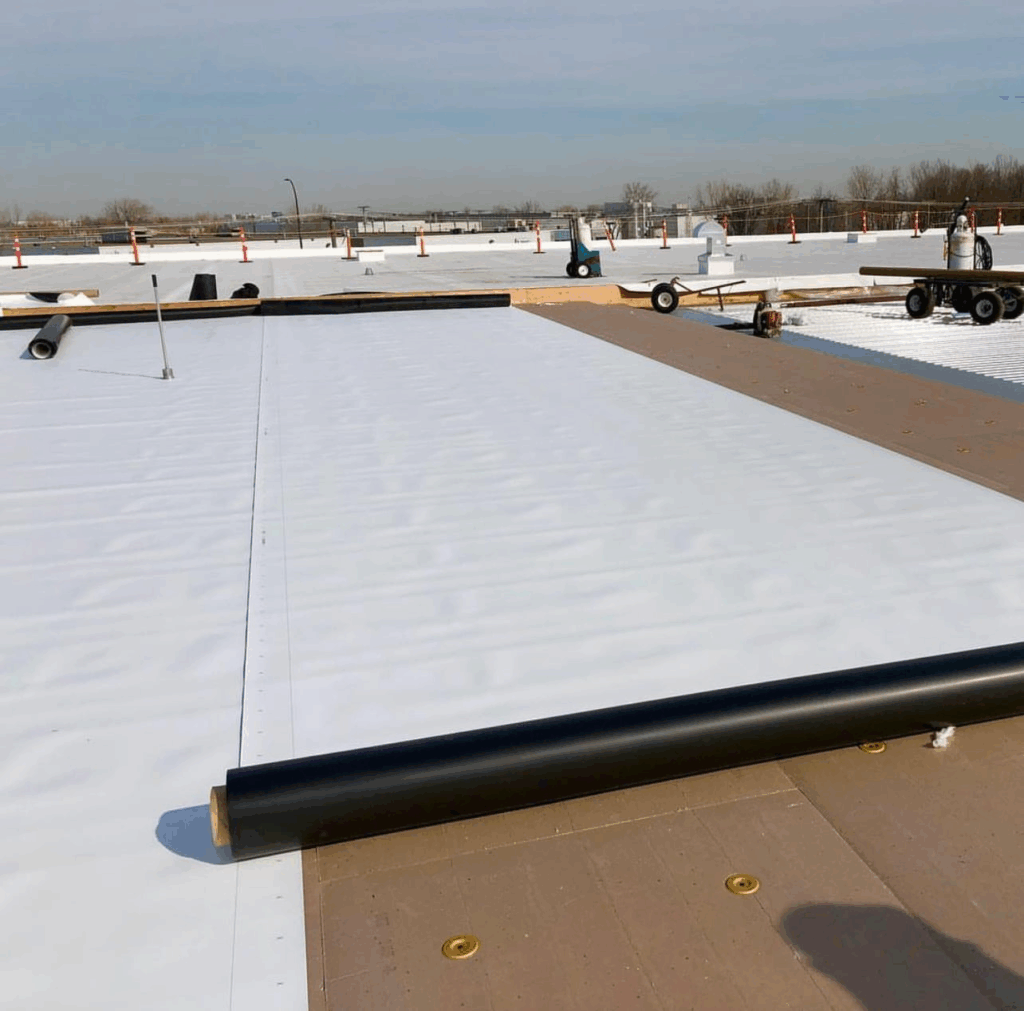
- Membrane Placement – TPO sheets are rolled out and precisely positioned.
- Seam Welding – Hot-air welding equipment bonds the seams into a single, waterproof sheet.
- Detail Work – Flashings, edges, and penetrations are sealed for complete protection.
- Final Inspection – Every seam and edge is checked for a perfect seal.
We never cut corners, because with TPO, proper seam welding and edge detailing determine whether the roof performs flawlessly for decades or fails prematurely.
5. TPO vs. Other Roofing Materials
When deciding on a roofing material, many property owners compare TPO to EPDM (Ethylene Propylene Diene Monomer) and PVC (Polyvinyl Chloride).
| Feature | TPO | EPDM | PVC |
|---|---|---|---|
| Color Options | White, gray, tan | Mostly black | White, gray |
| Energy Efficiency | High (reflective) | Low (absorbs heat) | High |
| Seam Welding | Heat-welded | Adhesive or tape | Heat-welded |
| Chemical Resistance | Good | Good | Excellent |
| Price | Moderate | Lower | Higher |
For Northeast Ohio’s mix of hot summers and snowy winters, TPO’s balance of affordability, energy efficiency, and durability makes it a smart choice.
6. Lifespan and Maintenance of TPO Roofs
A professionally installed TPO roof can last 20–30 years with minimal maintenance. To maximize lifespan:
- Inspect Annually – Look for loose seams, punctures, or debris.
- Clean as Needed – Remove dirt, leaves, and standing water.
- Check After Storms – High winds or hail can cause damage.
- Hire Professionals – DIY repairs can compromise the membrane.
S&K offers maintenance programs for both commercial and residential clients to keep your TPO roof performing at its best year-round.
7. Financing Your TPO Roof Installation
We understand that replacing or upgrading a roof is a major investment. That’s why S&K Construction and Remodeling LLC offers flexible financing options, so you can protect your property now and pay over time.
Benefits of financing with us:
- Competitive interest rates
- Fast approval process
- No prepayment penalties
8. Why Choose S&K Construction and Remodeling LLC for TPO Roofing
As an Owens Corning Preferred Contractor based in Jefferson, Ohio, we pride ourselves on delivering superior workmanship and customer satisfaction across Youngstown, Cleveland, Lakewood, Medina, Wickliffe, Euclid, Chagrin Falls, Gates Mills, Concord, and beyond.
Reasons to trust S&K:
- Certified and experienced roofers
- Outstanding Google reviews
- Commitment to quality materials and installation
- Transparent estimates with no hidden fees
- Local knowledge of Ohio weather conditions
9. The Future of TPO Roofing
With advances in manufacturing, today’s TPO membranes are stronger, more flexible, and more environmentally friendly than ever. We expect TPO to remain a top choice for flat and low-slope roofs in both residential and commercial applications.
Commercial TPO Roofing in Northeast Ohio
S&K Construction And Remodeling LLC helps businesses and property owners throughout Northeast Ohio with TPO roofing, flat roof repair, low-slope roof replacement, and commercial roof inspections.
We can help with:
- TPO roof inspections
- TPO roof repair
- Commercial flat roof replacement
- EPDM roofing
- PVC roofing
- Modified bitumen roofing
- Roof insulation upgrades
- Wet insulation replacement
- Ponding water issues
- Commercial roof estimates
Serving Jefferson, Ashtabula, Madison, Painesville, Mentor, Willoughby, Cleveland, Akron, Canton, Medina, Youngstown, Warren, and surrounding Northeast Ohio communities.
10. Final Thoughts
Schedule a Free TPO Roof Inspection in Northeast Ohio
Not sure if TPO is the right roofing system for your commercial building? S&K Construction And Remodeling LLC can inspect your flat roof, membrane, seams, flashing, insulation, drainage, and overall roof condition.
Our team will explain whether your building needs TPO roof repair, maintenance, insulation upgrades, or full commercial flat roof replacement.
Call today to schedule your free commercial roof inspection and estimate.