Replacing a Gable or Hip Roof in Northeast Ohio?
S&K Construction and Remodeling replaces gable, hip and complex residential roofing systems throughout Northeast Ohio.
If your roof is aging, leaking or storm damaged, we can evaluate the existing roofing system, roof decking, flashing, ventilation and other visible conditions and prepare a roof replacement estimate.
Schedule a free roofing estimate to discuss your home’s roof and available replacement options.
Gable roofs and hip roofs are two of the most common roof designs found on homes throughout Northeast Ohio.
Both can provide effective weather protection when properly designed and installed, but the two roof styles differ in appearance, framing complexity, attic space, wind behavior and overall roof geometry.
For homeowners replacing a roof, it is important to understand that roof shape is only one part of performance. Asphalt shingles, roof decking, flashing, underlayment, ventilation, insulation and installation quality also influence how the finished roofing system performs.
This guide explains the differences between gable and hip roofs and what Northeast Ohio homeowners should consider when comparing them.
What Is a Gable Roof?
A gable roof typically has two primary roof planes that slope upward and meet at a ridge.
At each end of the roof is a vertical triangular wall section known as the gable end.
Gable roofs are commonly found on many styles of Northeast Ohio homes because the basic geometry is straightforward and can provide substantial attic volume.
Common characteristics include:
- Two primary sloping roof planes
- A central ridge
- Vertical gable ends
- Rake edges extending from the eaves toward the ridge
- A wide range of possible roof pitches
More complex houses can combine several gable sections rather than using one simple gable from end to end.
What Is a Hip Roof?
A hip roof has roof planes that slope down toward the exterior walls on all sides rather than terminating in large vertical gable ends.
Where two outward-sloping roof planes meet, they create a hip.
Depending on the shape of the house, a hip roof may contain:
- Multiple roof planes
- Hip ridges
- A main ridge
- Eaves around several sides of the house
- Valleys when additional roof sections intersect
A simple rectangular hip roof and a complex hip-and-valley roof can therefore have very different levels of construction complexity.
What Is the Main Difference Between a Hip Roof and a Gable Roof?
The easiest difference to see is at the ends of the house.
A gable roof has vertical triangular gable walls beneath the roof edges.
A hip roof continues sloping downward on those sides instead.
This difference affects:
- Appearance
- Framing
- Roof surface area
- Attic volume
- Wind interaction
- Labor and material requirements
Neither design is automatically better for every house.
Gable Roof vs. Hip Roof: Cost
A simple gable roof is generally less complex to frame and cover than a comparable hip roof.
A hip roof usually contains additional roof planes, hip rafters or trusses and hip-and-ridge roofing details.
That can increase:
- Framing complexity
- Roof-covering area
- Hip-and-ridge materials
- Labor
However, homeowners should not use roof shape alone to estimate replacement cost.
Actual roof replacement pricing can also depend on:
- Total roof area
- Roof pitch
- Number of stories
- Tear-off requirements
- Decking condition
- Chimneys
- Skylights
- Valleys
- Roof penetrations
- Access
- Roofing material
A simple hip roof may still be easier to replace than an extremely complex multi-gable roof.
Gable Roof vs. Hip Roof in High Winds
Roof geometry influences the wind pressures acting on a building.
Hip roofs can have advantages in high-wind conditions because the roof slopes around the building rather than ending at large vertical gable walls.
However, this does not mean every hip roof is automatically windproof or that every gable roof is weak.
Actual wind performance also depends on:
- Roof decking attachment
- Framing and bracing
- Roof-to-wall connections
- Shingle installation
- Edge and starter details
- Roof-cover fastening
- Overall structural load path
For Northeast Ohio homeowners, proper construction and installation of the entire roofing assembly remain critical regardless of roof shape.
Are Gable Roofs Bad in the Wind?
No.
A properly designed and constructed gable roof can perform well.
Gable ends and roof edges do require proper structural support and attachment because wind pressures can become concentrated around roof edges, corners, eaves and peaks.
Problems become more likely when there are weaknesses involving:
- Gable-end framing
- Roof decking
- Fasteners
- Roof-to-wall connections
- Damaged shingles
- Poorly installed edge details
Roof shape should therefore be considered together with construction quality.
Is a Hip Roof Better for Northeast Ohio Snow?
Not automatically.
Both hip and gable roofs are used successfully in snowy climates.
Snow behavior depends on several factors, including:
- Roof pitch
- Roofing material
- Roof orientation
- Roof temperature
- Snow depth and type
- Wind
- Building heat loss
- Roof geometry
A steeper roof may shed snow differently from a lower-slope roof, but homeowners should not assume one roof shape alone eliminates winter roofing concerns.
Northeast Ohio homes can experience snow accumulation, lake-effect snow, ice and repeated freeze-thaw conditions regardless of whether the roof is gable or hip.
Can Gable and Hip Roofs Get Ice Dams?
Yes.
Ice dams can affect both roof designs.
Ice-dam formation is strongly influenced by uneven roof temperatures caused by heat loss from the building, air leakage, insulation conditions and winter weather.
Water backed up by ice may affect vulnerable roof edges and other roofing details.
That is why Northeast Ohio homeowners concerned about ice dams should evaluate the entire attic and roofing assembly rather than choosing a roof shape based on ice-dam claims.
Which Roof Has More Attic Space?
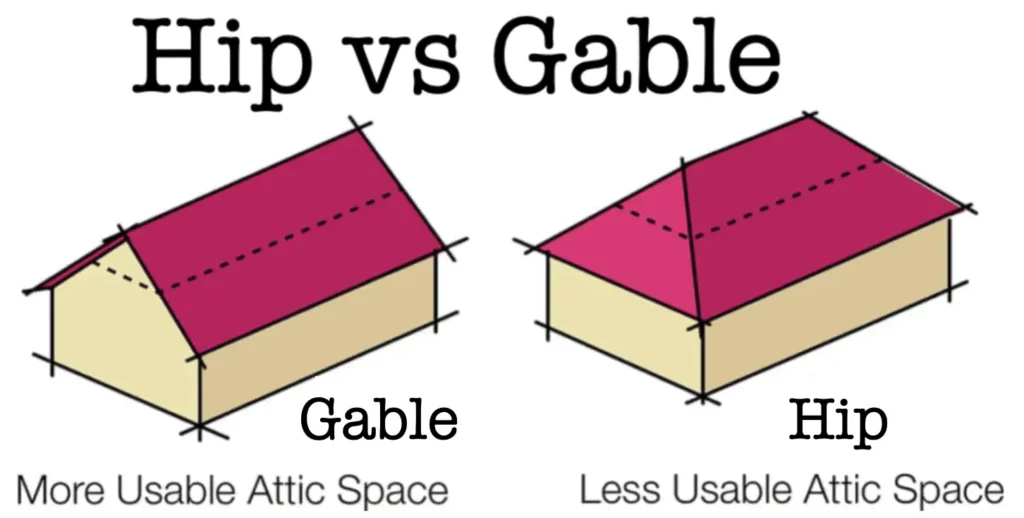
A simple gable roof often provides more usable attic volume than a comparable hip roof because the vertical gable walls do not slope inward.
A hip roof slopes downward on all sides, which can reduce usable space near the perimeter of the attic.
However, actual attic space depends on:
- Roof pitch
- Framing system
- Building width
- Ceiling design
- Mechanical equipment
- Insulation
- Ventilation layout
Additional attic volume does not automatically mean the attic can be converted into living space.
Any finished attic must be evaluated for appropriate framing, floor capacity, headroom, access and applicable building requirements.
Gable Roof vs. Hip Roof Ventilation
Both roof styles can be properly ventilated.
Ventilation should be designed based on the attic and roof assembly rather than assuming one shape is automatically better.
A typical vented attic may use intake ventilation near the eaves combined with exhaust ventilation higher on the roof.
The exact arrangement can depend on:
- Attic configuration
- Soffit availability
- Ridge length
- Roof geometry
- Existing insulation
- Air sealing
- Applicable ventilation requirements
Complex hip roofs sometimes have shorter ridge lengths than comparable gable roofs, which can affect how a ventilation system is designed.
The important objective is a properly planned ventilation system—not simply installing as many vents as possible.
Which Roof Has More Leak Potential?
Neither roof shape automatically leaks more.
Leaks usually occur because a roofing component or detail fails.
Common leak locations include:
- Flashing
- Valleys
- Chimneys
- Pipe boots
- Skylights
- Roof-to-wall transitions
- Damaged shingles
- Roof penetrations
- Improper installation
A very simple gable roof has fewer intersections than a complicated hip-and-valley roof, which may make the roofing layout simpler.
However, a properly installed complex roof can still provide reliable weather protection.
Roof complexity matters more than simply labeling a house “hip” or “gable.”
Does a Hip Roof Last Longer Than a Gable Roof?
There is no universal lifespan advantage simply because a roof is hip shaped.
Roof service life depends more heavily on the roofing material and complete assembly.
Factors include:
- Shingle product
- Installation quality
- Roof decking
- Underlayment
- Flashing
- Ventilation
- Weather exposure
- Wind and hail
- Snow and ice
- Maintenance
- Previous damage
A quality roof replacement should address all of these components regardless of roof shape.
Which Roof Looks Better?
Appearance is subjective.
Gable roofs often create a traditional, recognizable profile and can emphasize front-facing architectural features.
Hip roofs can produce a more continuous roofline because the roof slopes around all sides of the building.
The appearance can also change significantly based on:
- Roof pitch
- Shingle color
- Dormers
- Porches
- Exterior siding
- Brick or stone
- Home style
For roof replacement, homeowners should consider how the shingle color and dimensional pattern will look across the specific roof geometry.
Can You Put Architectural Shingles on Both Roof Types?
Yes, architectural asphalt shingles are commonly installed on both properly designed gable and hip roofs when the roof slope, deck and installation meet applicable product requirements.
The roof shape does not replace manufacturer installation requirements.
During replacement, the roofing contractor should evaluate:
- Roof decking
- Underlayment
- Ice-and-water protection
- Drip edge
- Starter shingles
- Flashing
- Valleys where present
- Hip-and-ridge shingles
- Ventilation
- Roof penetrations
Hip roofs typically use more hip-and-ridge cap material because of their additional exterior intersections.
Gable Roof vs. Hip Roof for Northeast Ohio Homes
Northeast Ohio homeowners should consider local weather along with the home’s existing design.
Roofs in the region can experience:
- Lake-effect snow
- Ice
- Freeze-thaw cycles
- High winds
- Heavy rain
- Hail
- Summer heat
A hip roof’s geometry may provide advantages under certain wind conditions, while a simple gable roof can provide straightforward construction and additional attic volume.
Neither advantage means one roof type is always superior.
The best roofing system is one that is appropriate for the home’s structure, properly installed and designed to manage Northeast Ohio weather.
Should You Change From a Gable Roof to a Hip Roof During Roof Replacement?
Usually, a standard roof replacement does not involve changing the basic structural shape of the house.
Changing a gable roof into a hip roof can require significant framing, structural and design work.
Most homeowners replacing an existing roof keep the current roof geometry and focus on improving the roofing system itself.
That may include:
- Replacing damaged decking
- Installing appropriate underlayment
- Improving flashing
- Installing new asphalt shingles
- Correcting ventilation problems
- Addressing roof penetrations
- Replacing hip-and-ridge materials
- Correcting previous installation problems
Major structural roof-shape changes should be evaluated separately from a normal roof-cover replacement.
Which Is Better: Gable Roof or Hip Roof?
There is no universal winner.
A gable roof may appeal to homeowners who value:
- Simpler geometry
- Potentially lower construction complexity
- More attic volume
- Traditional appearance
A hip roof may appeal to homeowners who value:
- Sloped roof planes on every side
- High-wind geometric advantages
- A continuous roofline
- A different architectural appearance
The existing structure, roof pitch, roofing material, budget and weather exposure should all be considered.
For most Northeast Ohio homeowners replacing a roof, the condition and installation of the complete roofing system will matter more than deciding whether the word “gable” or “hip” sounds better.
When designing or renovating a home, the choice of roof style plays a crucial role in both aesthetics and functionality. Two of the most common roofing styles are gable roofs and hip roofs. Each offers unique advantages and drawbacks, making them suitable for different climates, architectural styles, and homeowner needs.
In this guide, we’ll compare gable and hip roofs in terms of design, benefits, drawbacks, cost, durability, and ideal applications. By the end, you’ll have a clear understanding of which roofing style is best for your home.
What Is a Gable Roof?
A gable roof is one of the most recognizable roof types, featuring two sloped sides that meet at a peak to form a triangular shape. This simple yet effective design makes gable roofs one of the most popular choices for residential and commercial buildings alike.
Characteristics of a Gable Roof
- Two Sloped Sides: The roof consists of two angled sections that slope downwards from a central ridge.
- Triangular Gable Ends: The walls beneath the roof form a triangular shape.
- Steep Pitch Options: Gable roofs can be designed with steep pitches to enhance water runoff and attic space.
- Common in Various Architectural Styles: Found in Colonial, Cape Cod, and modern home designs.
Pros of a Gable Roof
- Cost-Effective Construction
- Gable roofs require fewer materials and less labor, making them more budget-friendly compared to complex roof styles.
- Excellent Water and Snow Drainage
- The steep slopes allow rain and snow to easily slide off, preventing moisture buildup and potential leaks.
- Easy to Build and Maintain
- The simple design makes gable roofs easier to construct, repair, and maintain compared to intricate roofing structures.
- More Attic Space
- The design creates a spacious attic, allowing for better insulation, storage, or even an additional living area.
Cons of a Gable Roof
- Less Stable in High Winds
- Gable roofs are prone to wind damage, especially if not properly braced. Strong winds can uplift the eaves and cause structural failure.
- May Require Additional Reinforcement
- In hurricane-prone areas, extra bracing and secure anchoring are necessary to prevent wind-related damage.
- Gable Ends Can Be Vulnerable to Weather
- The large, flat gable ends can be more exposed to heavy rain and wind-driven moisture.
What Is a Hip Roof?
A hip roof, also known as a hipped roof, features slopes on all four sides, which meet at a ridge or a single peak. Unlike a gable roof, a hip roof has no vertical gable ends, making it more aerodynamic and structurally stable.
Characteristics of a Hip Roof
- Four-Sided Design: Each side of the roof slopes downward at a consistent angle.
- No Vertical Gable Ends: All sides have a slope, eliminating large, exposed wall sections.
- More Complex Structure: The design requires additional framing and materials compared to gable roofs.
- Common in Ranch, Mediterranean, and Cottage-Style Homes.
Pros of a Hip Roof
- Superior Wind Resistance
- The aerodynamic design makes hip roofs more stable in high-wind areas, such as hurricane-prone regions.
- Better Durability and Longevity
- With slopes on all sides, hip roofs distribute weight evenly, reducing stress on structural components.
- Enhanced Curb Appeal
- The sleek and symmetrical appearance adds aesthetic value to homes, enhancing resale appeal.
- Greater Roof Overhangs for Shade and Protection
- Hip roofs often have extended eaves, providing better sun and rain protection for windows, walls, and entryways.
Cons of a Hip Roof
- Higher Construction Costs
- Due to their complexity, hip roofs require more materials, labor, and time to build, making them more expensive.
- Reduced Attic Space
- Unlike gable roofs, hip roofs limit attic space because of their inward-sloping design.
- More Maintenance Required
- With additional seams and valleys, hip roofs may require more frequent inspections and maintenance to prevent leaks.
Gable Roof vs. Hip Roof: Side-by-Side Comparison
| Feature | Gable Roof | Hip Roof |
|---|---|---|
| Cost | More affordable | More expensive due to complex construction |
| Durability | Prone to wind damage | Highly wind-resistant and stable |
| Maintenance | Easier to maintain and repair | Requires more maintenance due to additional seams |
| Snow & Rain Drainage | Excellent drainage | Good drainage but may require additional waterproofing in valleys |
| Attic Space | More attic space for storage or living | Less attic space due to sloping sides |
| Aesthetic Appeal | Simple and classic | Elegant and sophisticated |
| Best Climate | Ideal for dry or snowy climates | Suitable for high-wind and hurricane-prone areas |
Which Roof Style Is Best for You?
The decision between a gable and hip roof depends on several factors, including your budget, climate, and aesthetic preferences.
- Choose a Gable Roof If:
- You want a cost-effective, easy-to-build roof.
- You live in an area with mild to moderate weather conditions.
- You need extra attic space for storage or expansion.
- Choose a Hip Roof If:
- You live in a hurricane or high-wind region and need extra durability.
- You prefer a more sophisticated, stylish appearance.
- You don’t mind the extra cost for long-term stability and protection.
Get a Gable or Hip Roof Replacement Estimate in Northeast Ohio
Whether your Northeast Ohio home has a gable roof, hip roof or a combination of several roof sections, the performance of the roof depends on more than its shape.
S&K Construction and Remodeling can evaluate the existing roofing system and provide options for asphalt shingle roof replacement, damaged decking, flashing, ventilation and related roofing components.
Schedule a free estimate to have your roof evaluated and discuss the appropriate replacement system for your home. 440.235.3124