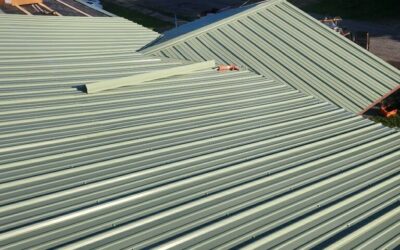
A summer storm does not have to last long to find a weak spot in your roof. Sometimes it is a twenty-minute downpour. Sometimes it is wind pushing rain sideways against the house. Then, a day or two later, you notice the stain.
The frustrating part is that the roof may look fine from the ground. No missing shingles. No obvious hole. Maybe the gutter even looks clear. But around a chimney, skylight, vent, wall, or valley, water found a path it should not have had.
That is how roof flashing failure often shows up in Cleveland homes. Heavy rain does not always create the problem. More often, it exposes a weak point around a chimney, wall, valley, vent, skylight, gutter edge, or storm-damaged area. S&K can inspect the source of the leak and determine whether the issue is flashing, shingles, gutters, storm damage, or a larger roof problem.
In this guide, we’ll walk through:
- What roof flashing actually does.
- Why heavy summer rain exposes flashing problems.
- Where flashing leaks usually start.
- What warning signs are worth checking.
- When flashing repair makes sense.
- When replacement may be the more practical financial decision.
If you are dealing with a roof leak after heavy rain, S&K Construction And Remodeling can help inspect the roof, show you what we find, and explain the next step without turning it into a guessing game.
What Is Roof Flashing and Why Does It Matter?
Roof flashing is the metal or waterproof transition material installed where the roof has a weak point by design. That includes chimneys, skylights, vents, valleys, dormers, sidewalls, and roof-to-wall connections.
Shingles do a good job across the open field of the roof. Flashing handles the harder areas. It helps direct water away from seams, corners, penetrations, and places where two surfaces meet.
That sounds simple, but it matters a lot. A roof can have good shingles and still leak if the flashing is wrong.
Most flashing is made from aluminum, galvanized steel, copper, or another metal. The right material depends on the roof, the surrounding materials, and the detail being repaired. Around a chimney, for example, the flashing has to work with masonry. Around a vent pipe, the boot and seal are often the weak point. In a valley, the concern is water volume.
Northeast Ohio weather makes those details even more important. Around here, summer rain can come down hard and fast, not politely. Fall leaves can slow drainage right where the roof needs water to keep moving. Winter snow and ice can press into small gaps. Then, little by little, freeze-thaw cycles can open those gaps a bit more. By the next heavy rain, the “probably fine” spot can become the reason there is a stain on the ceiling.
Ohio roof assembly rules also address flashing details. Sidewall flashing, for example, needs to be sized and installed so water is directed away from the wall and back onto the roof or into the gutter. That may sound like contractor fine print, but it matters. When flashing is done right, water leaves the roof the way it should. When it is not, water tends to do what water always does: find the easiest way in.
What to Know Before Fixing a Flashing Leak
A flashing leak is not always complicated, but it does need to be diagnosed carefully. Water does not always show up directly below the leak. It may enter near a chimney, run along decking or framing, and appear several feet away inside the house.
Start With the Likely Leak Area
Start with where the water shows up inside, but do not stop there. A stain near the fireplace may point toward chimney flashing. A drip near a bathroom or kitchen could mean a plumbing vent is involved. A mark near an outside wall may have something to do with step flashing.
Still, water is sneaky. It can enter in one place, run along decking or framing, and show up somewhere else entirely. That is why the roof should be checked from above and, when possible, from the attic too.
Look at the Whole Roof System
A flashing repair may be more than adding sealant. The problem could involve old shingles, damaged underlayment, a cracked pipe boot, loose metal flashing, gutter overflow, storm damage, or soft decking near the leak area.
The goal is not to cover the ceiling stain or seal the first gap you see. The goal is to find the water path and stop it before the damage spreads.
Know When Repair Is Enough
Some flashing leaks can be repaired when the damage is isolated and the surrounding roof is still in good shape. That may include replacing a pipe boot, resetting loose flashing, correcting a small sealant failure, or repairing shingles near the leak.
Replacement becomes part of the conversation when the roof is older, brittle, losing granules, leaking in several areas, or showing storm damage beyond one flashing detail. A good inspection should make that difference clear.
Ask About the Scope Before Work Begins
Minor roof leak repair may be straightforward. Larger reroofing work, structural repairs, or storm restoration may involve more planning. Requirements can vary by city or township, so it is worth confirming the project scope before work begins.
Why Heavy Summer Rain Exposes Flashing Problems
Light rain can miss a weakness. Heavy rain usually does not.
During a hard storm, more water is moving across the roof at once. Wind can push rain under loose flashing. Gutters can overflow and send water backward toward the roof edge. Humidity and heat can age old sealant. If leaves, granules, or debris are slowing drainage, the water has even more time to find a gap.
That is why some homeowners say, “It only leaks when the rain comes from a certain direction.” That is a real clue. Wind-driven rain can expose flashing problems that do not show up during an ordinary shower.
It is also why a leak may seem to disappear for a while. The opening is still there. It just needs the right storm to show itself again.
Common Causes of Roof Flashing Failure
Failed roof flashing usually comes down to one of a few issues. Sometimes it is just age. Sometimes the flashing was never installed correctly in the first place.
Poor Installation
Flashing has to be layered so water moves out and away from the roof system. If it is nailed in the wrong place, reused incorrectly, tucked poorly behind siding, or installed out of order, it can send water behind the shingles instead of away from them.
This is one reason the cheapest repair is not always the best value. If the detail is wrong, sealing the surface may not solve much.
Cracked or Dried Sealant
Sealant is not supposed to carry the whole roof, but it often helps around vents, fasteners, and transitions. Summer heat can dry it out. Winter movement can pull it apart.
Once sealant cracks, rain has an easier way in.
Rust or Corrosion
Older metal flashing can rust or corrode, especially where water sits or debris traps moisture. Once metal thins or pulls away, the surrounding roof materials can no longer shed water the way they should.
Storm Damage
Wind, hail, branches, and debris can shift flashing. The change may be small enough that you would never notice it from the driveway. During the next storm, that small movement may be enough to let water in.
Expansion and Contraction
Metal flashing, shingles, and decking all move as temperatures change. Hot afternoons and cooler nights create small daily movement. Over time, that movement can loosen fasteners, widen gaps, or break old seals.
Clogged Gutters
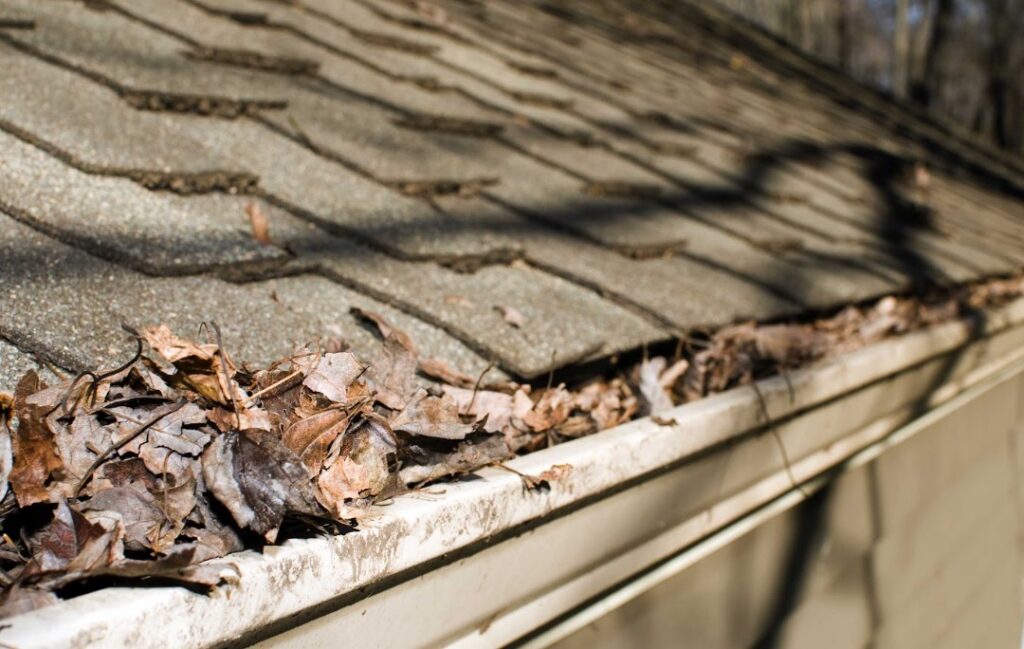
Gutters are part of the roof’s drainage system. When they clog or pull away, water can back up near the eaves, fascia, soffits, and flashing. That is why gutter problems and flashing leaks often show up together.
Common Places Roof Flashing Fails
Flashing tends to fail where water is concentrated or where the roof meets another surface. These are the areas we pay close attention to during leak inspections.
Chimney Flashing Leaks
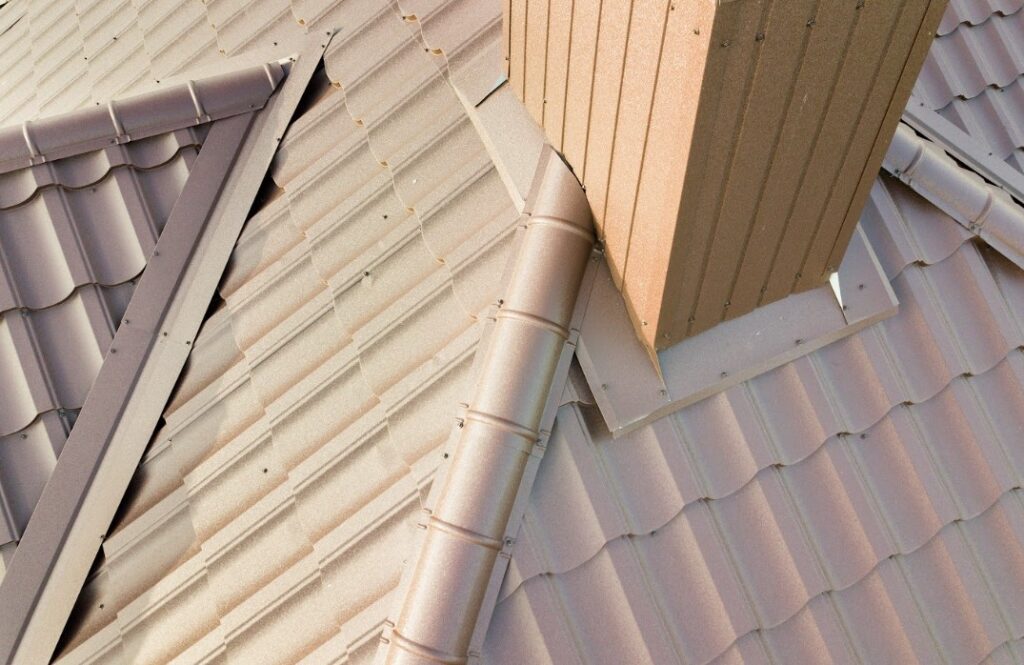
A chimney flashing leak is common because a chimney interrupts the roof on all sides. Base flashing, counter flashing, mortar joints, and sealants all have to work together.
When one part separates or cracks, water can move behind the flashing and into the home. The leak may show up near the fireplace, on a ceiling, or inside the attic.
Skylight Flashing Leaks
A skylight flashing leak may come from the flashing kit, curb, sealant, or surrounding shingles. Water does not always enter where it appears inside. It can start higher on the roof and travel along the skylight opening.
Roof Vent Flashing Leaks
A roof vent flashing leak often starts with a cracked rubber boot or loose metal flashing. These leaks can drip into the attic for a while before a homeowner sees a ceiling stain.
Valley Flashing Problems
Valleys carry a lot of water during storms. When leaves, granules, or debris slow the flow, water can move sideways under shingles or worn flashing.
This is one of those details that can look harmless until a heavy storm hits.
Step Flashing Failure Along Walls
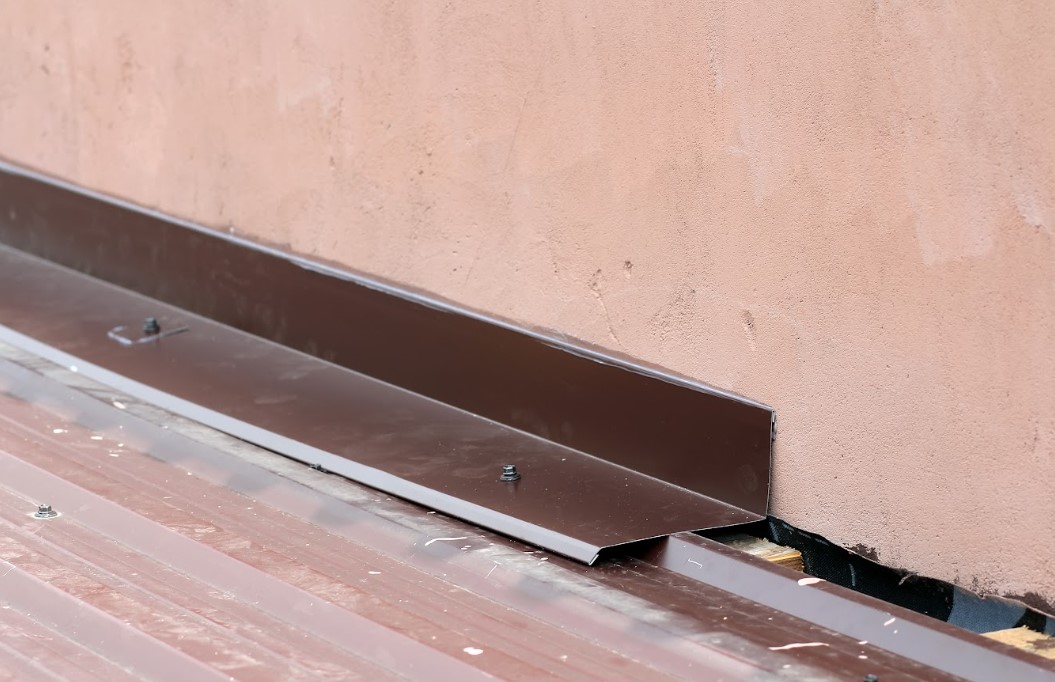
Step flashing is used where the roof meets a wall, dormer, or second-story section. Each piece should work with the shingles to move water down and out.
If the step flashing is missing, short, bent, or poorly tucked behind siding, water can run behind it.
Gabled Roof-to-Wall Flashing Failure
A gabled roof-to-wall flashing failure can be hard to see because siding and trim may hide the problem. If water does not have a clean exit path at the wall intersection, it can work behind the exterior materials.
Signs You Have a Flashing Leak
A roof leak after heavy rain may be a flashing problem, especially if the leak appears near a chimney, skylight, vent, valley, or wall.
Watch for:
- Water stains on ceilings or walls.
- Damp insulation in the attic.
- Leaks near chimneys or fireplaces.
- Peeling paint near rooflines.
- A musty smell after storms.
- Dripping during heavy rain.
- Lifted shingles near roof transitions.
- Rusted, bent, or loose flashing.
- The same leak returning after past repairs.
One stain is enough to check. Waiting for the stain to grow usually does not save money. It just gives water more time to reach insulation, drywall, or wood.
How Gutters and Storm Damage Can Make Flashing Leaks Worse
Flashing leaks do not always happen by themselves. Gutters, shingles, and storm damage can all add pressure to the same weak areas.
When gutters clog or overflow, water can back up near eaves, fascia, soffits, and roof edges. That water may find a flashing gap that would not leak during normal drainage. Valleys can have a similar problem when leaves, granules, or debris slow the flow of water.
Storm damage can make the issue worse. Wind can lift shingles or shift flashing. Hail can bruise shingles and weaken the surface. Branches and debris can bend metal or create small openings around roof transitions.
That is why a roof leak inspection should not stop at the flashing. The contractor should also check gutters, surrounding shingles, attic moisture, storm impact areas, and any signs that water has been traveling under the roof system.
Why Cleveland Homes Are Vulnerable During Summer Storms
Cleveland-area roofs deal with a rough seasonal pattern. Summer brings heavy rain, humidity, wind, and fast-moving storms. Later in the year, leaves can collect in valleys and gutters. Then snow, ice, and freeze-thaw cycles can open small gaps even wider.
That sequence is hard on flashing because flashing protects the exact places where water is most likely to enter. Chimneys, skylights, vents, walls, valleys, and roof edges all need clean drainage and tight transitions.
A small issue can sit quietly for months. Then one heavy summer storm pushes water sideways, fills a valley, overflows a gutter, or exposes a loose flashing edge. By the time the stain appears inside, the roof may have been warning you for a while.
Roof Flashing Repair vs. Roof Replacement
A flashing leak does not automatically mean you need a new roof. It also should not be dismissed as “just caulk it.”
Here is a practical way to think about it:
| Situation | Likely Next Step |
| One small sealant gap | Repair and monitor the area. |
| Rusted flashing | Replace the damaged flashing. |
| Loose chimney flashing | Reset, fasten, and seal the detail correctly. |
| Cracked pipe boot | Replace the boot or vent flashing. |
| Same leak keeps returning | Inspect decking, underlayment, and surrounding shingles. |
| Older roof with multiple leaks | Discuss replacement versus repeated repairs. |
If the shingles around the flashing are still flexible and the leak is isolated, repair may be enough. If the roof is brittle, losing granules, or leaking in several areas, replacement may be the more sensible long-term choice.
That is not always the answer homeowners want to hear. We understand that. A roof is a major expense. But there is a point where repeated repairs stop being the lower-cost option.
Why DIY Flashing Repairs Can Be Risky
Caulk has its place, but it is not a full flashing system.
A surface patch may slow a drip for a while, especially during light rain. The risk is that water keeps moving underneath while the leak looks “fixed” from the outside. Incorrect flashing layers can also trap water instead of sending it away.
There is the safety issue, too. A wet or steep roof is not a good place to troubleshoot a leak. Storm damage, soft decking, and loose shingles can make it more dangerous than it looks.
Warranty coverage is another concern. Manufacturer warranties and workmanship guarantees depend on proper installation. A temporary fix that damages shingles or redirects water can make a later repair more complicated.
What S&K Looks for During a Roof Leak Inspection
A good leak inspection looks beyond the obvious stain. S&K checks the roof system around the likely leak area and follows the clues until the source makes sense.
During a flashing inspection, a contractor may check:
- Chimney flashing.
- Step flashing.
- Valley flashing.
- Vent pipe boots.
- Skylight flashing.
- Wall transitions.
- Gutter backup issues.
- Missing or lifted shingles.
- Storm-damaged areas.
- Interior water stains.
- Attic moisture.
- Soft decking or damaged underlayment.
S&K Construction And Remodeling uses supervised crews and start-to-finish photos so homeowners can see what was found and how the work was completed. That matters because roof leaks can feel uncertain. Photos make the problem easier to understand.
When to Call for Roof Leak Repair
Call a roofing contractor if you see water stains, wet insulation, dripping near a chimney, leaks around a skylight, recurring stains after storms, or shingles lifting near a roof transition.
A contractor can determine whether the problem is flashing, shingles, gutters, storm damage, ventilation, or another part of the roof system.
For homeowners in Lakewood, Parma, Euclid, Strongsville, Mentor, and other Northeast Ohio areas, timely flashing leak repair can help prevent damaged insulation, mold concerns, wood rot, and more expensive interior repairs.
For full replacements, S&K offers 50-year Owens Corning warranty options and a 10-year workmanship guarantee. Most residential roof replacement projects are completed in one day with a full crew, which helps limit disruption and exposure to changing weather.
Financing is also available for qualified homeowners through Service Finance, including zero down options, 12 months same-as-cash, and longer-term payment choices. Pre-approval typically requires a 620 credit score and can often be completed by phone.
Cleveland Roofing FAQs About Roof Flashing Failure
Flashing leaks can be confusing because the roof may look fine from the ground while water is still getting inside. These answers can help you decide what to watch for after heavy rain.
What causes roof flashing failure?
Roof flashing failure is usually caused by poor installation, rust, cracked sealant, storm damage, thermal movement, clogged gutters, or normal aging. The most common trouble spots are chimneys, walls, skylights, vents, and valleys.
Why does my roof leak only during heavy rain?
A roof leaks only during heavy rain when wind, water volume, or gutter backup pushes rain into a small opening. That opening may stay dry during light rain but leak during a hard summer storm.
What are the signs of a roof flashing leak?
Signs of a roof flashing leak include water stains, damp attic insulation, leaks near chimneys or skylights, peeling paint, musty odors, rusted flashing, and lifted shingles near roof transitions. A recurring leak in the same area is also a warning sign.
Can roof flashing be repaired?
Yes, roof flashing can be repaired when the issue is isolated and the surrounding roof is still in good condition. Rusted, poorly installed, or repeatedly leaking flashing may need replacement rather than another surface patch.
Is roof flashing failure common during local summer storms?
Yes, roof flashing failure is common during local summer storms because heavy rain, wind, humidity, and temperature swings expose weak roof transitions. Older roofs and clogged gutters are more likely to show problems.
Should I caulk leaking roof flashing myself?
No, you should not rely on caulk alone for leaking roof flashing. Caulk may slow a leak temporarily, but it often does not correct the real water path or the flashing detail underneath.
Does homeowners insurance cover a flashing leak?
Homeowners insurance may cover a flashing leak if sudden storm damage caused the problem. It usually does not cover old wear, poor maintenance, or installation issues, so photos and documentation are important.
Stop Water Intrusion Before the Damage Spreads
Flashing leaks are usually small before they are expensive. A loose chimney detail, cracked pipe boot, clogged valley, failed sidewall transition, storm-damaged shingle, or rusted flashing edge can stay quiet until the right storm pushes water through.
S&K Construction And Remodeling has served Northeast Ohio homeowners since 2013 with emergency service, supervised crews, start-to-finish photos, strong Owens Corning warranty options, a 10-year workmanship guarantee, and practical financing choices.
Seeing a leak after heavy rain? S&K can inspect your roof, flashing, gutters, and storm-damaged areas to find the source and recommend the right repair before water damage spreads.